
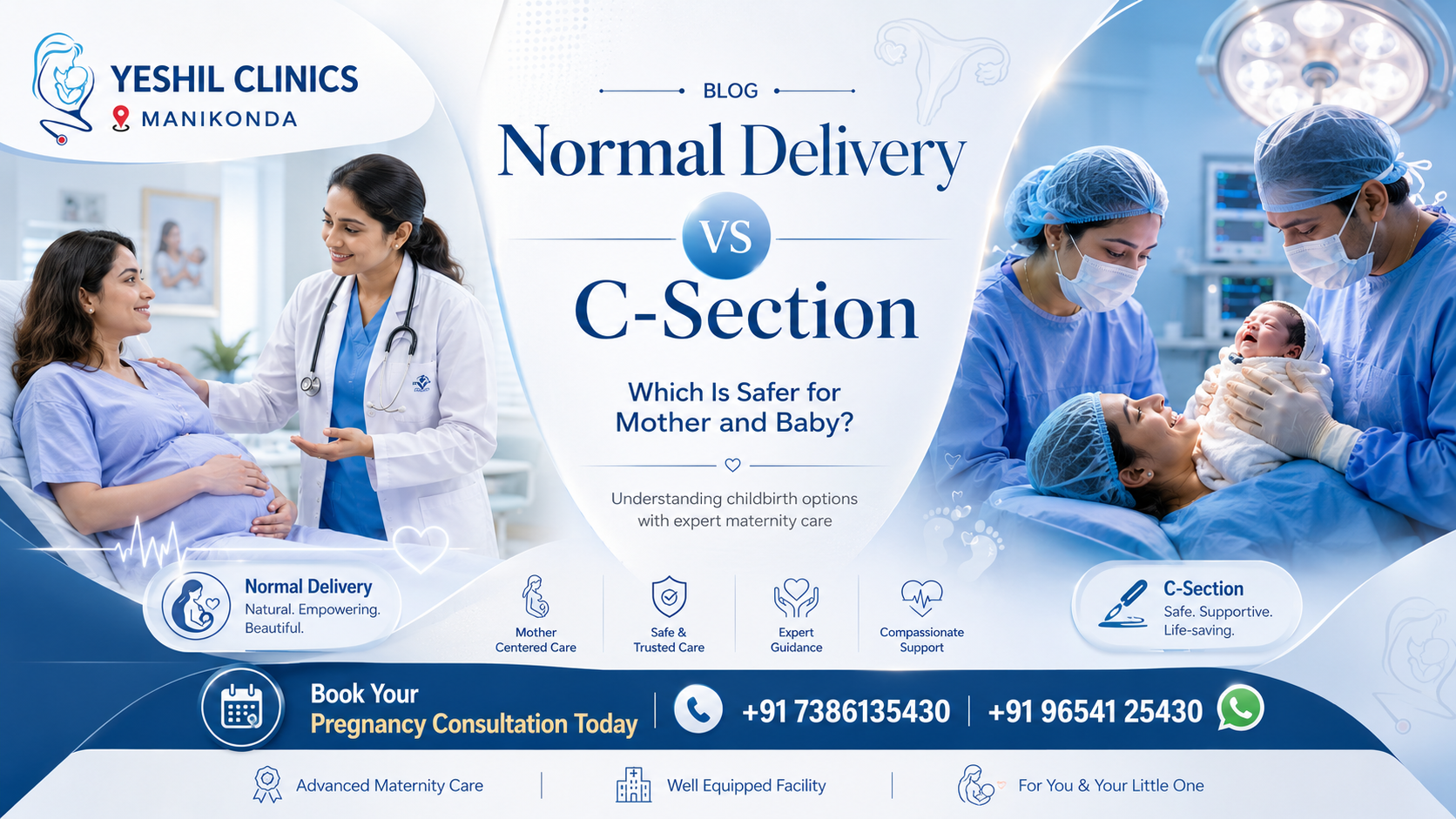
Pregnancy is one of the most important phases in a woman’s life, and one of the most common questions expecting mothers ask is: “Normal delivery vs C-section — which delivery is safer?” Understanding the differences between these childbirth methods can help women make informed decisions during pregnancy and prepare confidently for labor and delivery.
Both normal delivery and C-section delivery are safe medical procedures when performed under proper medical supervision. However, the right delivery method depends on the mother’s health, the baby’s condition, pregnancy complications, and recommendations from healthcare professionals.
With advancements in pregnancy care and maternity care, doctors today focus on ensuring the safest possible outcome for both mother and baby. Whether it is a vaginal birth or cesarean delivery, timely medical support and expert care play a major role in reducing risks during childbirth.
If you are searching for guidance regarding vaginal delivery vs cesarean, this detailed guide explains the benefits, risks, recovery process, and factors that determine the safest delivery option.
A normal delivery, also known as vaginal delivery, is the natural process through which a baby is born through the birth canal without major surgical intervention. It usually occurs after labor contractions help the cervix dilate and assist the baby’s movement during childbirth.
Normal delivery is considered the preferred childbirth method in uncomplicated pregnancies because it generally involves faster recovery and fewer surgical risks.
This occurs naturally without medical assistance or labor-inducing medications.
Doctors may use medical tools such as forceps or vacuum extraction to help deliver the baby safely if complications arise during labor.
Labor is medically initiated when continuing the pregnancy may pose risks to the mother or baby.
A C-section delivery, also known as a cesarean section, is a surgical procedure where the baby is delivered through incisions made in the mother’s abdomen and uterus.
A cesarean may be planned in advance or performed as an emergency procedure during labor if complications develop.
Today, modern surgical advancements and experienced healthcare professionals have made cesarean deliveries safer than ever before. Many women with high-risk pregnancies safely deliver healthy babies through this method.
When comparing normal delivery vs c section, several factors should be considered including recovery time, medical necessity, risks, and future pregnancy implications.
| Factor | Normal Delivery | C-Section Delivery |
| Procedure | Natural childbirth | Surgical procedure |
| Recovery Time | Faster | Longer |
| Hospital Stay | Shorter | Longer |
| Pain After Delivery | Less long-term pain | Post-surgical discomfort |
| Risk of Infection | Lower | Slightly higher |
| Future Pregnancies | Usually easier | May affect future deliveries |
| Emergency Need | Less common | Sometimes medically necessary |
Both methods can be safe depending on the mother’s condition and the expertise of the healthcare team.
The answer to “which delivery is safer” depends entirely on the pregnancy condition.
For low-risk pregnancies, normal delivery is generally considered safer because it involves fewer complications, faster healing, and lower surgical risks. However, there are situations where a cesarean section becomes the safest option for protecting the mother and baby.
Doctors evaluate several factors before deciding the safest childbirth method.
Many doctors encourage vaginal birth whenever medically possible because of its various health benefits.
Women who undergo normal delivery usually recover more quickly and can resume daily activities sooner compared to surgical recovery after a C-section.
Since no major surgery is involved, risks related to anesthesia, blood loss, and infections are generally lower.
Most mothers can return home within one or two days after a normal delivery.
Babies born vaginally often experience improved lung function because fluids are naturally expelled during childbirth.
Many mothers can initiate breastfeeding sooner after a vaginal birth.
Although natural childbirth has many benefits, complications may occasionally occur.
Labor contractions can be physically demanding and painful for some women.
Some women may experience tearing around the vaginal area during childbirth.
In certain cases, vaginal delivery may affect pelvic muscles and bladder control temporarily.
Unexpected complications during labor may require emergency cesarean delivery.
Proper pregnancy care and regular prenatal monitoring help reduce these risks significantly.
A cesarean section can be lifesaving in complicated pregnancies.
C-sections are recommended when vaginal birth may pose serious risks.
Certain medical situations make surgical delivery safer for the baby.
Scheduled cesarean deliveries allow doctors to prepare effectively for high-risk situations.
Women carrying twins or triplets may require surgical delivery for safety reasons.
Despite being common and generally safe, cesarean delivery is still major surgery.
Recovery after surgery may take several weeks.
Surgical wounds may carry a higher infection risk compared to vaginal birth.
Mothers may experience abdominal discomfort and mobility limitations temporarily.
Repeated cesarean sections can increase risks in future pregnancies.
However, choosing an experienced c section specialist in Hyderabad can greatly improve safety and recovery outcomes.
Doctors may recommend a cesarean section under several medical conditions.
Conditions such as high blood pressure, gestational diabetes, or placenta previa may require surgical delivery.
If the baby’s heartbeat becomes abnormal during labor, emergency intervention may be necessary.
A baby positioned feet-first instead of head-first may require a C-section.
If labor fails to progress normally, surgical delivery may be safer.
Twin or triplet pregnancies often increase delivery risks.
Regular prenatal consultations help doctors identify these concerns early.
Proper pregnancy care is essential for ensuring a healthy pregnancy and safe childbirth.
Regular prenatal checkups help monitor:
High-quality maternity care also includes emotional support, nutritional counseling, childbirth education, and emergency medical preparedness.
Women should choose experienced healthcare providers and trusted hospitals for safe labor and delivery management.
Recovery is one of the biggest differences in vaginal delivery vs cesarean.
Most women recover within a few weeks and regain mobility faster.
Tips for recovery include:
Cesarean recovery requires more rest because the body heals from major abdominal surgery.
Recovery tips include:
Proper postnatal care is essential regardless of the delivery method.
Childbirth affects emotional well-being as much as physical health.
Some mothers experience:
Strong family support, adequate rest, and professional counseling can help mothers adjust emotionally after childbirth.
Women should never hesitate to seek medical guidance if emotional symptoms become overwhelming.
In some situations, women may choose between vaginal birth and cesarean delivery. However, medical safety always remains the top priority.
Doctors usually encourage normal delivery when:
Cesarean sections are recommended when medical risks make vaginal birth unsafe.
The final decision should always be based on professional medical evaluation and individualized care.
To improve the chances of a safe childbirth experience:
Routine consultations help monitor maternal and fetal health.
Nutritious foods support baby development and maternal strength.
Light exercise and walking may improve stamina for labor.
Meditation and relaxation techniques can help maintain emotional well-being.
Always consult healthcare professionals regarding symptoms or concerns.
Selecting the right healthcare provider is one of the most important decisions during pregnancy.
A trusted women’s clinic in Hyderabad should offer:
Women with high-risk pregnancies should especially seek guidance from experienced obstetric specialists.
The debate around normal delivery vs c section often creates confusion among expecting mothers. In reality, both childbirth methods are safe when performed under proper medical supervision.
For uncomplicated pregnancies, normal delivery is generally preferred due to quicker recovery and fewer surgical risks. However, c section delivery becomes essential in situations involving medical complications or risks to the mother and baby.
Understanding which delivery is safer depends on individual pregnancy conditions, maternal health, fetal position, and medical recommendations. Proper pregnancy care, quality maternity care, and regular prenatal monitoring play the biggest role in ensuring safe childbirth outcomes.
Whether choosing vaginal delivery vs cesarean, mothers should focus on receiving expert medical support and personalized healthcare guidance. Consulting an experienced c section specialist in Hyderabad or a trusted women’s clinic in Hyderabad can help ensure the safest possible delivery experience for both mother and baby.