Irregular periods are among the most common symptoms experienced by women with Polycystic Ovary Syndrome (PCOS). While occasional changes in the menstrual cycle may occur due to stress, lifestyle changes, or temporary hormonal fluctuations, persistent irregular periods often indicate an underlying health condition that requires medical attention.
PCOS is a common hormonal disorder that affects women during their reproductive years and can significantly impact menstrual health, fertility, metabolism, and overall well-being. One of the primary reasons women seek medical advice for PCOS is the difficulty in maintaining regular menstrual cycles.
Understanding the right PCOS irregular periods treatment can help restore hormonal balance, improve menstrual regularity, support fertility, and reduce long-term health risks. With early diagnosis and personalized care, women with PCOS can effectively manage symptoms and lead healthy lives.
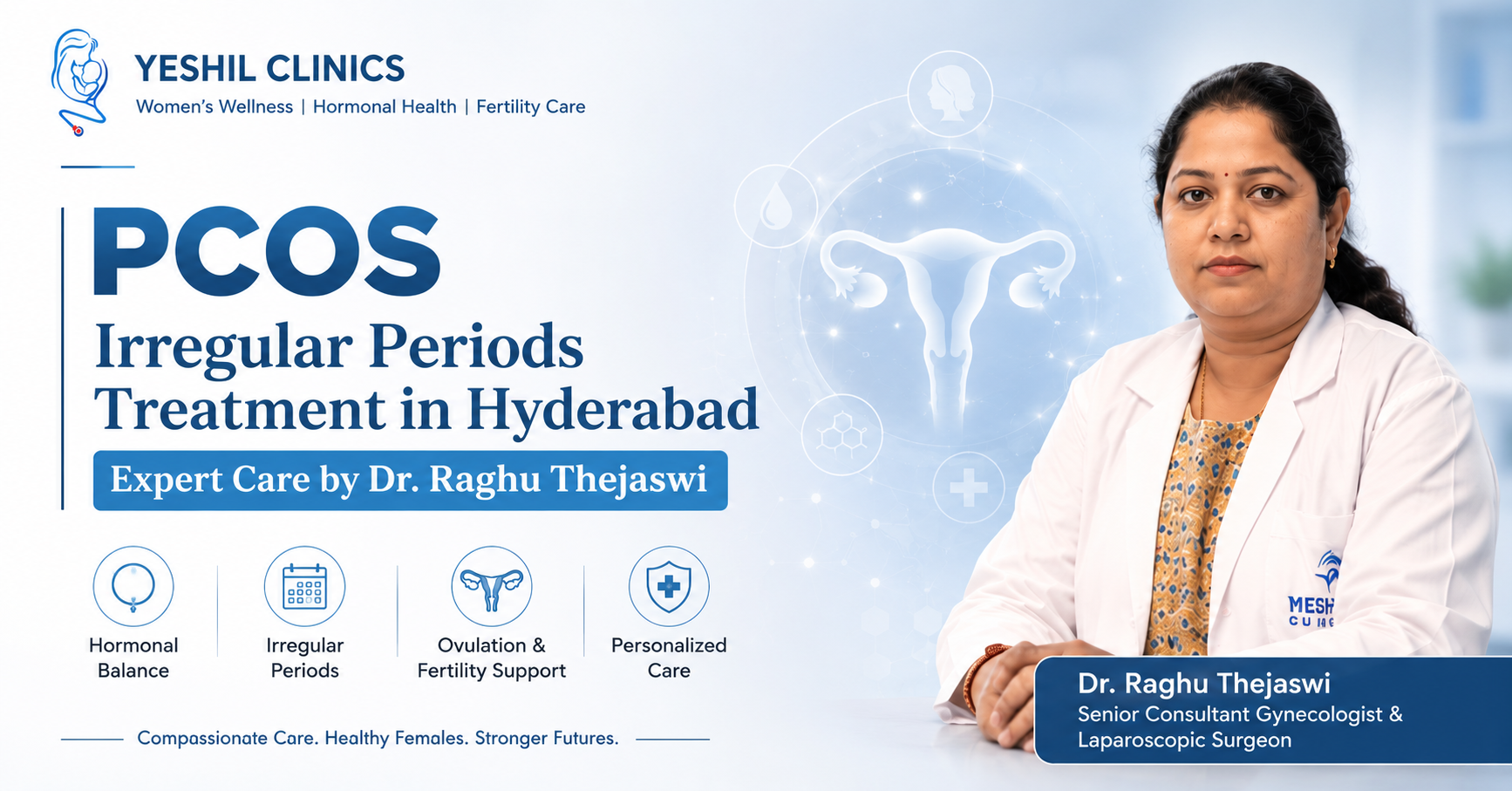
At Yeshil Clinics, Dr. Raghu Thejaswi provides comprehensive PCOS evaluation and treatment for women across Hyderabad, Manikonda, Puppalaguda, Gachibowli, Narsingi, Financial District, and surrounding areas.
PCOS irregular periods treatment focuses on identifying the underlying hormonal imbalance, regulating menstrual cycles, improving ovulation, reducing symptoms, and preventing long-term complications through lifestyle modifications, nutritional management, and individualized medical care.
Polycystic Ovary Syndrome (PCOS) is a hormonal condition that affects ovarian function and reproductive health. It is one of the most common endocrine disorders among women of reproductive age.
Women with PCOS may experience:
The condition affects each woman differently, which is why personalized treatment is essential.
A normal menstrual cycle depends on the regular release of an egg from the ovary, a process known as ovulation.
In women with PCOS, ovulation may occur irregularly or stop altogether. Without regular ovulation, the menstrual cycle becomes unpredictable, resulting in:
Several hormonal disturbances contribute to PCOS-related menstrual irregularities, including:
These imbalances interfere with the normal functioning of the ovaries and can significantly impact reproductive health.
Recognizing the symptoms early can help women seek timely treatment and avoid future complications.
Women with PCOS may go months without menstruating due to irregular ovulation.
Cycles lasting longer than 35 days are frequently observed in women with PCOS.
Long gaps between periods can result in excessive buildup of the uterine lining, leading to heavier bleeding when menstruation occurs.
Irregular ovulation makes it difficult to predict fertile days and can affect family planning.
In addition to irregular periods, women may experience:
Many women delay seeking medical advice, assuming irregular periods are normal. However, persistent menstrual irregularities should never be ignored.
Consult a gynecologist if:
Early diagnosis allows for:
Prompt medical evaluation often leads to more successful treatment outcomes.
The ideal PCOS irregular periods treatment depends on symptom severity, age, fertility goals, and overall health.
Lifestyle improvements are often the first step in managing PCOS effectively.
Small, consistent changes can make a significant difference over time.
Nutrition plays a critical role in managing PCOS symptoms.
A balanced diet helps improve insulin sensitivity and supports hormonal health.
Medical treatment may be recommended when lifestyle modifications alone are insufficient.
Treatment goals may include:
A personalized treatment plan ensures the best possible outcomes.
For women trying to conceive, treatment may focus on:
Early fertility evaluation can help identify appropriate treatment options and improve pregnancy outcomes.
Many women benefit from combining medical treatment with healthy lifestyle practices.
Weight management is one of the most effective ways to improve menstrual regularity in women with PCOS.
Benefits include:
Exercise supports both metabolic and reproductive health.
Helpful activities include:
Consistent physical activity can improve hormonal regulation and overall well-being.
Stress can worsen hormonal imbalances and affect menstrual cycles.
Effective stress-management techniques include:
Quality sleep plays a vital role in hormone regulation.
Women should aim for:
Good sleep habits support hormonal health and menstrual regularity.
Yes. PCOS is one of the leading causes of ovulation-related fertility challenges.
When ovulation becomes irregular or absent, conception may become more difficult.
Women may experience:
Many women with PCOS successfully conceive with proper treatment and medical guidance.
A comprehensive fertility evaluation can help identify factors affecting conception and determine the most appropriate treatment strategy.
Consider seeking fertility support if:
Early intervention can improve reproductive outcomes significantly.
Accurate diagnosis is essential for developing an effective treatment plan.
Your gynecologist may review:
Blood tests may help assess hormone levels and identify imbalances associated with PCOS.
Pelvic ultrasound can evaluate ovarian appearance and help support the diagnosis of PCOS when appropriate.
A combination of clinical evaluation, laboratory testing, and imaging often provides the most accurate diagnosis.
Every woman’s experience with PCOS is unique.
Some women primarily struggle with irregular periods, while others may experience fertility challenges, weight concerns, acne, or metabolic issues.
PCOS is a long-term condition that benefits from ongoing medical supervision and regular follow-up.
Continuous monitoring helps:
Proper management can reduce the risk of:
Early and consistent care plays a crucial role in protecting overall health.
Women searching for PCOS treatment in Hyderabad, irregular periods treatment Hyderabad, or a PCOS specialist in Hyderabad can benefit from comprehensive gynecological care tailored to their individual needs.
Dr. Raghu Thejaswi provides expert evaluation and personalized treatment for women experiencing:
Patients from Manikonda, Puppalaguda, Gachibowli, Narsingi, Financial District, and nearby Hyderabad locations can access evidence-based care focused on improving reproductive health and overall well-being.
Whether you are seeking guidance for menstrual irregularities, fertility planning, or long-term PCOS management, early consultation can help you achieve better health outcomes.
Is irregular periods always a sign of PCOS?
No. Irregular periods can occur due to stress, thyroid disorders, weight fluctuations, hormonal changes, and other medical conditions. Proper evaluation is necessary to identify the cause.
Can PCOS be cured permanently?
PCOS is a chronic condition that can be effectively managed through lifestyle modifications, medical treatment, and ongoing monitoring.
How long does PCOS treatment take to regulate periods?
The timeline varies depending on individual health factors, symptom severity, treatment adherence, and overall hormonal balance.
Can weight loss improve PCOS symptoms?
Yes. Healthy weight management can improve insulin sensitivity, support ovulation, and help regulate menstrual cycles in many women.
Can I get pregnant if I have PCOS?
Yes. Many women with PCOS successfully conceive with appropriate medical guidance and fertility-focused treatment when necessary.
Which doctor should I consult for PCOS treatment in Hyderabad?
A qualified gynecologist experienced in PCOS management, reproductive health, and hormonal disorders can provide comprehensive diagnosis and treatment.
PCOS is one of the most common causes of irregular periods among women of reproductive age. Left untreated, it can affect fertility, metabolic health, and overall quality of life. Fortunately, effective treatment options are available.
The right PCOS irregular periods treatment combines lifestyle improvements, nutritional guidance, medical management, and individualized care to restore hormonal balance and support long-term reproductive health.
If you are experiencing irregular menstrual cycles, missed periods, or other symptoms of PCOS, seeking early evaluation from an experienced gynecologist can help you achieve better health outcomes and improved quality of life.
With timely diagnosis, personalized treatment, and ongoing support, women with PCOS can successfully manage symptoms and maintain healthy reproductive health.