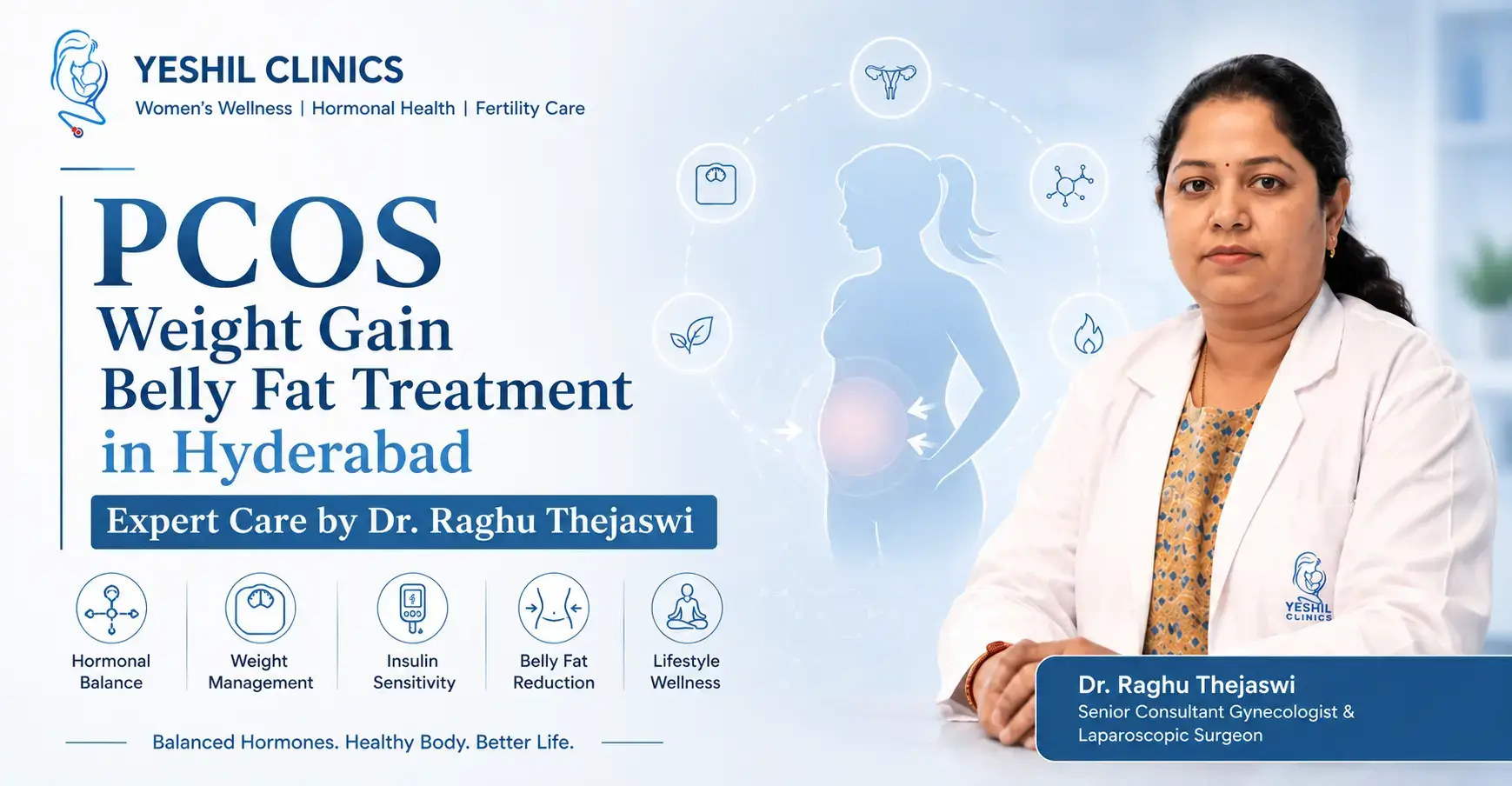
PCOS weight gain belly fat is one of the most common and frustrating symptoms experienced by women with Polycystic Ovary Syndrome (PCOS). Many women notice increased fat accumulation around the abdomen despite following healthy eating habits and exercising regularly. Hormonal imbalances, insulin resistance, and metabolic changes associated with PCOS can make losing belly fat significantly more difficult.
For many women, the challenge goes beyond appearance. Excess abdominal fat may increase the risk of diabetes, fertility issues, cardiovascular disease, and other long-term health concerns. Understanding the causes and treatment options for PCOS weight gain belly fat is the first step toward improving hormonal balance and achieving sustainable weight management.
At Yeshil Clinics, Dr. Raghu Thejaswi provides comprehensive PCOS evaluation and personalized treatment plans for women across Hyderabad, Manikonda, Puppalaguda, Gachibowli, Narsingi, Financial District, and surrounding areas.
PCOS weight gain belly fat refers to excess abdominal fat accumulation caused by hormonal imbalances, insulin resistance, and metabolic changes associated with Polycystic Ovary Syndrome. Effective treatment focuses on improving hormone balance, managing insulin resistance, supporting healthy weight loss, and reducing long-term health risks.
Polycystic Ovary Syndrome (PCOS) is one of the most common hormonal disorders affecting women of reproductive age. It impacts reproductive hormones, ovarian function, metabolism, and menstrual health.
Common symptoms include:
Hormones regulate appetite, metabolism, energy use, and fat storage. When these hormones become imbalanced, the body may store more fat than usual, particularly around the abdomen.
Several factors contribute to weight gain in women with PCOS:
Insulin resistance is one of the primary drivers of PCOS weight gain belly fat. Higher insulin levels encourage fat storage and can increase hunger, making weight management more challenging.
Hormonal changes associated with PCOS can alter the way the body stores fat. Many women notice increased fat accumulation around the waistline.
Insulin resistance promotes abdominal fat storage and is one of the major reasons why PCOS belly fat develops.
Chronic stress can worsen hormonal imbalances and contribute to increased belly fat accumulation.
Abdominal fat is often linked to higher health risks than fat stored elsewhere in the body, including diabetes, cardiovascular disease, and metabolic syndrome.
Many women notice gradual expansion around the waist despite maintaining similar eating habits.
Weight loss may occur more slowly due to hormonal and metabolic factors.
Insulin resistance may increase cravings, especially for sugary and processed foods.
Women with PCOS often report lower energy levels, making it harder to stay physically active.
One of the most frustrating aspects of PCOS weight gain belly fat is gaining weight despite following a relatively healthy lifestyle.
Insulin resistance and abdominal obesity significantly increase diabetes risk.
Excess belly fat may increase the likelihood of developing heart-related conditions over time.
Hormonal imbalances can affect ovulation and reproductive health.
Women with PCOS are at increased risk of metabolic syndrome, which can affect long-term health outcomes.
Untreated PCOS can contribute to ongoing hormonal disruption and associated complications.
Lifestyle improvements form the foundation of PCOS management.
Focus on balanced nutrition, regular exercise, adequate sleep, and stress management.
Regular movement helps improve insulin sensitivity and supports healthy weight management.
Meditation, yoga, deep breathing exercises, and mindfulness can help support hormonal balance.
Protein-rich foods may help improve satiety and reduce unhealthy cravings.
Fiber supports digestion and helps regulate blood sugar levels.
Low GI foods may help improve insulin sensitivity.
Regular cardiovascular exercise supports calorie expenditure and heart health.
Building muscle can improve metabolic efficiency.
Yoga supports both physical fitness and stress reduction.
Sustainable exercise habits are more effective than extreme workout routines.
Medical treatment may help address hormonal disruptions contributing to PCOS weight gain belly fat.
Improving insulin sensitivity is often a key component of treatment.
Every woman’s symptoms and health goals are different.
Regular follow-up helps ensure treatment remains effective.
Gradual and sustainable weight loss is generally more effective than rapid weight-loss approaches.
Small daily improvements often lead to significant long-term results.
Long-term success depends on developing realistic and sustainable habits.
Avoid extreme dieting, skipping meals, inconsistent exercise, and unrealistic expectations.
Results vary depending on hormonal balance, insulin resistance, sleep quality, stress levels, and lifestyle habits.
Healthy weight loss takes time. Consistency is often more important than speed.
Professional medical guidance can help create a safer and more effective treatment plan.
No two women experience PCOS in exactly the same way.
Individualized recommendations often produce better long-term outcomes.
Regular follow-up helps track progress and optimize treatment plans.
Women looking for PCOS weight gain belly fat treatment in Hyderabad, PCOS specialist in Manikonda, PCOS weight loss treatment near Gachibowli, or hormonal imbalance treatment in Hyderabad can benefit from comprehensive gynecological evaluation and personalized care.
Dr. Raghu Thejaswi provides expert management for:
Patients from Manikonda, Puppalaguda, Gachibowli, Narsingi, Financial District, and Hyderabad can access evidence-based treatment focused on improving both reproductive and metabolic health.
PCOS can contribute to abdominal fat accumulation due to hormonal imbalances and insulin resistance.
Yes. Many women with PCOS experience increased fat storage around the abdomen.
With appropriate lifestyle modifications, medical treatment, and hormonal management, many women can successfully reduce PCOS-related belly fat.
Hormonal imbalances and insulin resistance can make fat loss more challenging.
The most effective treatment combines nutrition, exercise, hormonal evaluation, and personalized medical care.
A qualified gynecologist experienced in PCOS management can provide comprehensive evaluation and treatment.
PCOS weight gain belly fat is a common but manageable symptom of Polycystic Ovary Syndrome. While hormonal imbalances and insulin resistance can make weight loss more challenging, early diagnosis and the right treatment approach can help improve hormone balance, reduce abdominal fat, regulate menstrual cycles, and support overall health.
If you are struggling with PCOS weight gain belly fat, seeking expert guidance from Dr. Raghu Thejaswi can help you develop a personalized treatment plan tailored to your unique health needs. With proper care, sustainable lifestyle changes, and ongoing support, achieving healthier weight management and improved well-being is possible.