

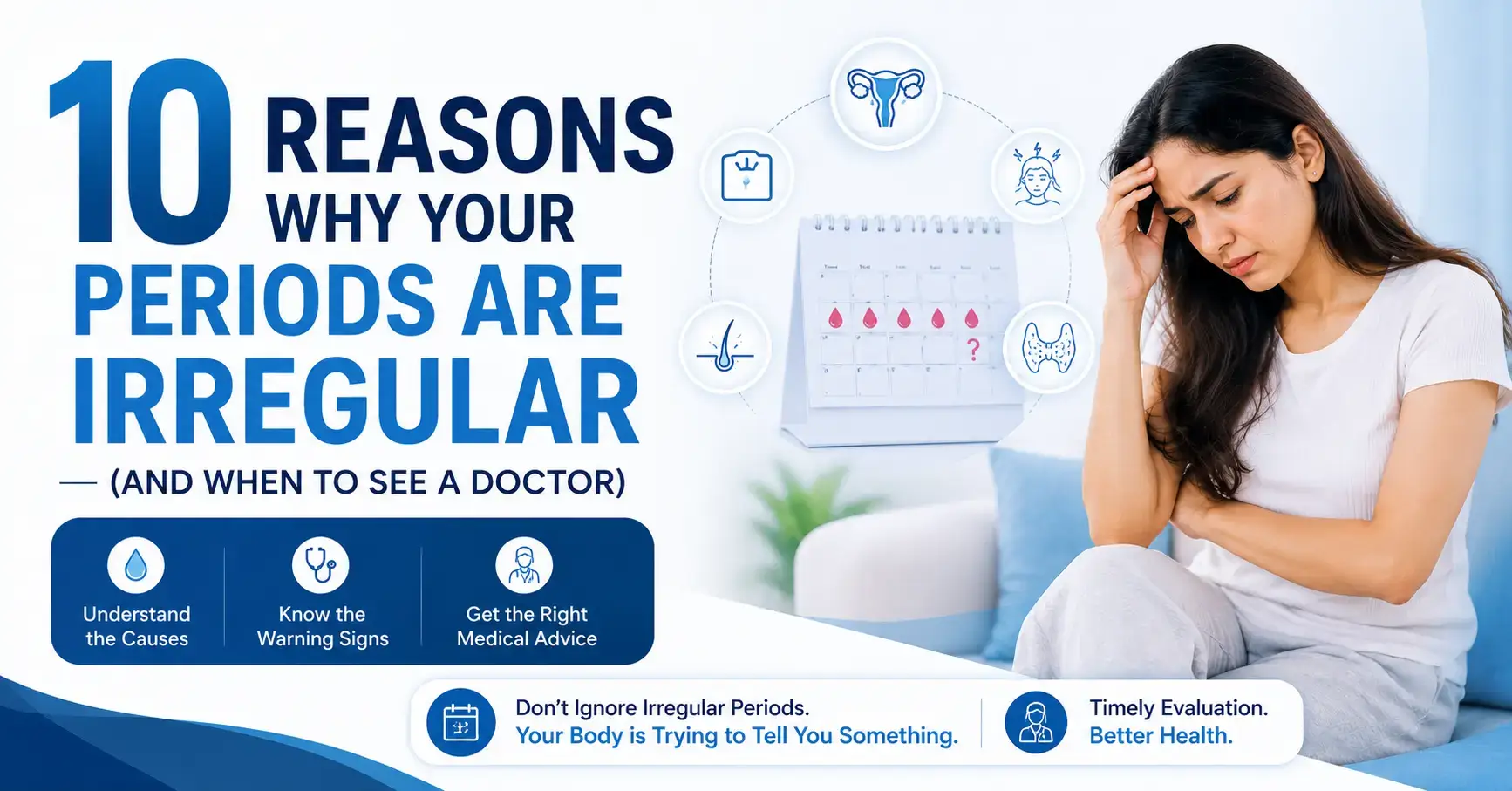
Periods are considered irregular when the time between menstrual cycles varies significantly from month to month. While occasional changes in cycle length are common, frequent irregularities may indicate an underlying health issue that requires attention.
For most women, a normal menstrual cycle occurs every 21 to 35 days. If your periods come too early, too late, stop altogether, or vary dramatically in flow and duration, it may be a sign that something is affecting your hormonal balance.
Understanding the Irregular Periods Causes in Young Women commonly experience can help identify when medical evaluation is necessary.
At Yeshil Clinics, many young women consult Dr. T. Raghu Tejaswi for concerns related to missed periods, delayed cycles, and menstrual irregularities. Early evaluation often helps identify treatable causes and prevent long-term complications.
To understand why periods become irregular, it helps to know how a normal cycle functions.
Several hormones work together to regulate menstruation.
Estrogen helps prepare the uterine lining for a potential pregnancy.
Progesterone stabilizes the uterine lining after ovulation.
FSH stimulates the ovaries to develop eggs.
LH triggers ovulation and plays a crucial role in fertility.
Any disruption in these hormones can lead to menstrual irregularities.
Although a 28-day cycle is often considered typical, healthy cycles can range from 21 to 35 days.
Stress, illness, hormonal changes, lifestyle factors, and certain medical conditions can all affect menstrual timing.
PCOS is one of the most common irregular periods causes in young women experience.
This hormonal disorder affects ovulation, causing periods to become infrequent, delayed, or completely absent.
Women with PCOS often do not ovulate regularly, leading to unpredictable menstrual cycles.
At Yeshil Clinics, PCOS is among the most frequently diagnosed causes of irregular menstruation in young women.
Physical and emotional stress can significantly affect menstrual cycles.
Stress increases cortisol production, which can interfere with reproductive hormones.
Yes. Anxiety and chronic stress may delay ovulation, causing late or missed periods.
Sudden changes in body weight can affect hormone production.
Restrictive diets and extreme calorie reduction may cause periods to become irregular or stop altogether.
Excess body weight can contribute to insulin resistance and hormonal disruptions that affect menstruation.
Regular exercise is beneficial, but excessive physical activity may disrupt hormone levels.
Athletes and women engaging in intense training may experience delayed or absent periods due to reduced estrogen levels.
The thyroid gland plays an important role in regulating metabolism and reproductive health.
An underactive thyroid can lead to heavier, less frequent periods.
An overactive thyroid may cause lighter or skipped periods.
Because thyroid disorders often mimic other hormonal conditions, proper evaluation is essential.
Young women often experience menstrual irregularities during the first few years after puberty.
The reproductive system may take time to establish regular ovulation patterns, resulting in cycle fluctuations.
Diet has a direct impact on reproductive health.
Low iron levels may contribute to fatigue and menstrual abnormalities.
Conditions such as anorexia and bulimia can severely disrupt hormone production and menstruation.
Some medications can affect menstrual cycles.
Starting, stopping, or switching contraceptives may temporarily alter menstrual patterns.
Certain antidepressants, hormonal medications, and chronic disease treatments can influence menstrual cycles.
Modern lifestyles often interfere with natural hormonal rhythms.
Poor sleep quality can disrupt hormone production and contribute to irregular cycles.
A missed period should always raise the possibility of pregnancy.
Pregnancy is one of the most common causes of missed periods in sexually active women.
If your period is late, taking a pregnancy test can help rule out pregnancy as a cause.
Occasional cycle changes may not indicate a serious problem. However, some symptoms require medical evaluation.
Absent periods may signal hormonal disorders or other medical conditions.
Heavy bleeding that interferes with daily activities should be assessed promptly.
Painful periods accompanied by irregular cycles may indicate underlying gynecological conditions.
Unexpected bleeding should always be evaluated by a healthcare professional.
You should seek medical advice if:
Identifying the underlying cause is the first step toward effective treatment.
Your doctor will discuss menstrual patterns, symptoms, medications, and lifestyle factors.
A physical assessment may help identify signs of hormonal imbalance.
Hormone testing can reveal conditions such as PCOS and other endocrine disorders.
Evaluating thyroid health is often part of the diagnostic process.
Pelvic ultrasound can help assess the ovaries and uterus.
Further testing may be recommended based on individual health concerns.
Treatment depends on the underlying cause.
Many women benefit from healthy lifestyle changes.
Maintaining a healthy weight supports hormonal balance.
Managing stress may help restore regular menstrual cycles.
Moderate exercise supports overall reproductive health.
In some cases, hormone-based treatments may be recommended to regulate menstrual cycles.
Treating PCOS, thyroid disorders, and other health conditions often improves menstrual regularity.
Regular follow-up helps ensure treatment effectiveness and overall reproductive wellness.
Menstrual irregularities can affect both reproductive and overall health. Receiving expert care can help identify the cause and provide effective solutions.
Dr. T. Raghu Tejaswi provides comprehensive evaluation and management for women experiencing menstrual concerns and hormonal disorders.
Every patient receives a detailed assessment to identify potential underlying causes.
Treatment recommendations are tailored to each woman’s unique health needs and reproductive goals.
Yeshil Clinics focuses on long-term care and preventive health strategies to support overall well-being.
Some irregularity is common during adolescence, but persistent menstrual changes should be evaluated.
Yes. Chronic stress can interfere with hormone regulation and affect ovulation.
Missing three or more consecutive periods warrants medical evaluation.
Yes. PCOS is one of the leading causes of irregular menstrual cycles in young women.
You should seek medical advice if irregular periods are frequent, severe, or accompanied by other symptoms.
Yes. Conditions that interfere with ovulation can make conception more difficult.
If your menstrual cycles have become unpredictable, delayed, or unusually heavy, consulting a qualified gynecologist can help determine the cause and ensure you receive the right treatment at the right time.